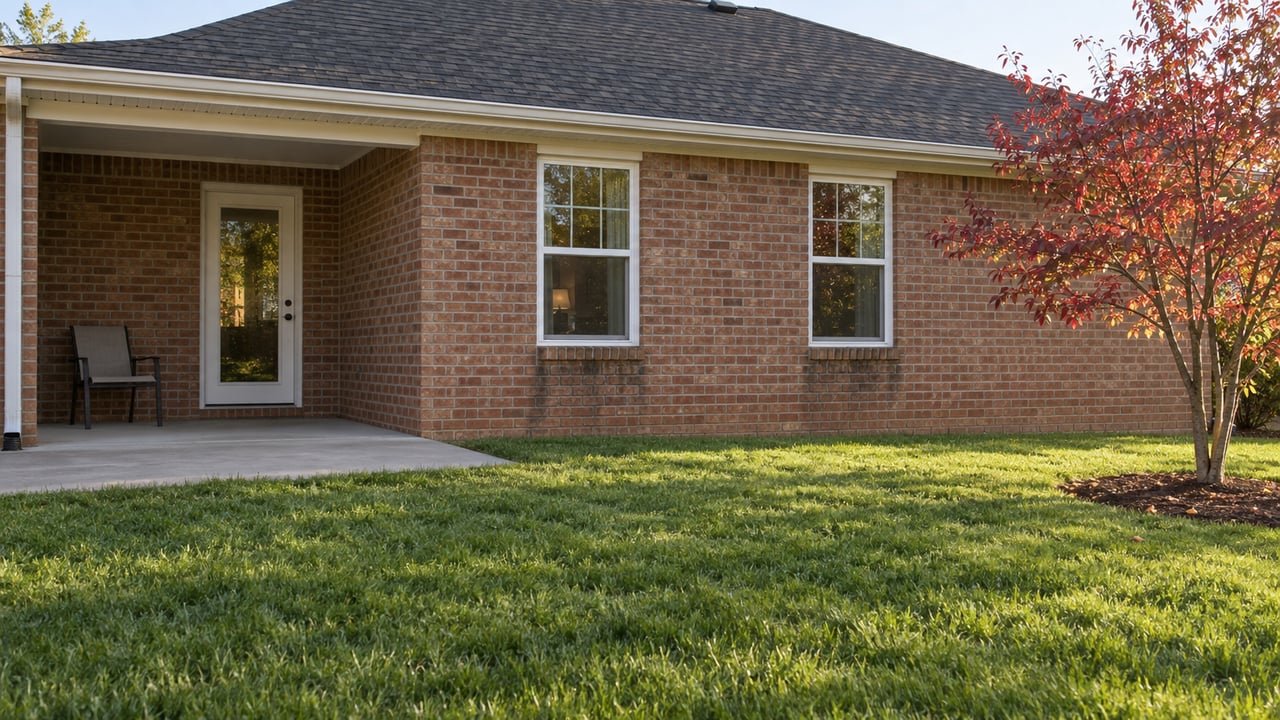
Over the most recent trailing 12 months, the median sale price for a home in Bono landed at $228,950, up 11% from the year before it. By February 2026, the median list price had moved to $239,000. Read on its own, that kind of jump looks like a town heating up: existing homes appreciating, sellers pricing with more confidence, buyers paying more for the same houses that sold for less a year earlier.
That's not quite what happened. Bono's median moved because the mix of what's actually for sale changed. A wave of new construction, most of it on smaller lots than the homes that came before it, now makes up a large share of the market. The median didn't rise because your grandmother's 1978 ranch house got more valuable. It rose because more of what's selling now is new, and new costs more per house even when it costs less per acre.
If you're comparing Bono to a Jonesboro neighborhood, or trying to figure out whether that 11% is a signal to move fast or a number that doesn't apply to the house you actually want, the distinction matters more than the headline figure does.
What the Median Is Actually Counting
Bono's current list prices span a wide range, from around $60,000 to roughly $290,000. That spread isn't noise. It's two different housing stocks getting averaged into one number.
On one end, you have homes built in the 1970s and 80s: ranch-style houses and cottages that typically sit on lots around an acre. These were built when Bono was still mostly known as a former railroad town bordering farmland, and the lot sizes reflect that. On the other end, new construction dominates current inventory, and it's arriving in subdivisions platted at a different scale entirely, often around a quarter acre per lot.
The City of Bono's own description of the town captures the shift in plain terms: new homes, from moderate to upscale, are being built to meet demand from people moving in, alongside a base of longtime residents who've been there for decades. That's two markets sharing one zip code, and the median treats them as if they're the same product.
An Acre Lot Versus a Quarter Acre, at Roughly the Same Price
Here's what that looks like when you set it side by side.
| Housing Stock | Typical Era | Typical Lot Size | Where You'll See It |
|---|---|---|---|
| Established homes | 1970s to 1980s | Around 1 acre | Older in-town streets, Len-Ford Subdivision |
| New construction | Recent to current | Around a quarter acre | Winding Ridge, Redwood Subdivision, Ridge Park |
A buyer scrolling listings and seeing two homes near the same price, one from each column, might assume they're choosing between comparable properties in different conditions. They're actually choosing between comparable price tags attached to very different amounts of land. The quarter-acre new build gets you current wiring, current insulation, and a warranty. The acre lot gets you space, mature trees in many cases, and a structure that will eventually need the updates the new build already has.
Neither is the better choice in absolute terms. But the median price doesn't tell you which one you're bidding on, and if you're specifically looking for acreage, you're competing for a shrinking slice of a market where most of the recent activity is happening somewhere else on the lot-size spectrum.
The Down Payment Gap Nobody Highlights
The other piece hiding inside that median is financing, and it changes who can compete for which houses.
A meaningful share of Bono's entry-level and new-construction listings are marketed as eligible for USDA Rural Development loans, which allow qualified buyers to purchase with zero down. Run the math against that February 2026 median of $239,000: a conventional loan with 25% down requires roughly $59,750 in cash before a buyer even gets to closing costs. An eligible RD borrower can walk into the same price point with nothing down, assuming they meet the program's income and property-location requirements.
That gap shows up specifically on the smaller-lot, newer-construction side of the market in the listings that reference it. It doesn't show up as often on the acreage and custom-built side. The practical effect is that new construction in Bono draws a wider pool of qualified buyers with less cash on hand, which puts more competitive pressure on that segment specifically, while the older, larger-lot homes draw a buyer pool that more often needs conventional financing to compete.
If you're a first-time buyer weighing Bono against a starter neighborhood in Jonesboro, that financing detail is worth a conversation with a lender before you fall in love with a floor plan. It can change what "affordable" actually means for your specific situation.
What This Means If You're Weighing Bono Against a Jonesboro Neighborhood
Bono sits about 8 miles south of Jonesboro, close enough that it functions as a commuter town for people working in Jonesboro or connected to Arkansas State University. That proximity is part of what's driving the new construction in the first place. Builders are responding to buyers who want Jonesboro-adjacent access without Jonesboro-level lot prices, and for a while, that trade worked cleanly. As new subdivisions fill in, though, the quarter-acre lots that made Bono's new construction more accessible are also what's now pulling the median upward.
The comparison that actually matters isn't Bono's median against Jonesboro's median. It's your specific priority, lot size or newer construction, against the segment of Bono's market built for that priority. A buyer who wants an acre and doesn't mind updating a kitchen is shopping a different pool of listings than a buyer chasing a zero-down new build, even though both might end up looking at homes priced within $10,000 of each other.
A Few Questions Worth Answering Before You Shop
Does the zero-down USDA loan apply to any home in Bono? Eligibility depends on the property's location and the buyer's income, not simply on being inside Bono city limits. The program is tied to designated rural areas, and the specifics change based on household size and income relative to local limits. A lender who works USDA loans regularly can tell you within a few minutes whether a specific address and household qualify.
Is new construction actually a better value than an older home on a full acre? It depends on what you're optimizing for. New construction typically costs less to maintain in the first several years and often comes with a builder warranty, but it gives up land. An older home on a larger lot usually costs more to update but offers space that isn't being replicated in current subdivision plans. Neither is objectively the smarter buy. They're different products that happen to share a median.
Why did the median rise 11% if individual home values didn't necessarily rise that much? Medians reflect what sold, not what appreciated. When a market shifts toward pricier new construction as a share of total sales, the midpoint moves up even if a specific 1978 ranch house down the street sold for about what a similar one sold for the year before.
Bono's market rewards buyers who ask what they're actually comparing before they compare prices. If you're trying to figure out whether Bono, a specific Jonesboro neighborhood, or somewhere in between fits what you're actually looking for, Kay L Doss can walk through the specific listings and financing paths that apply to your situation. Schedule a free consultation and bring your questions about lot size, loan programs, and what a given price actually buys in this market.
This article is general information, not legal, tax or financial advice. Consult a qualified professional about your situation.